
Natenadze’s Wine Cellar
A 400-year-old vine, a forgotten region, and the man who refused to let it stay that way.
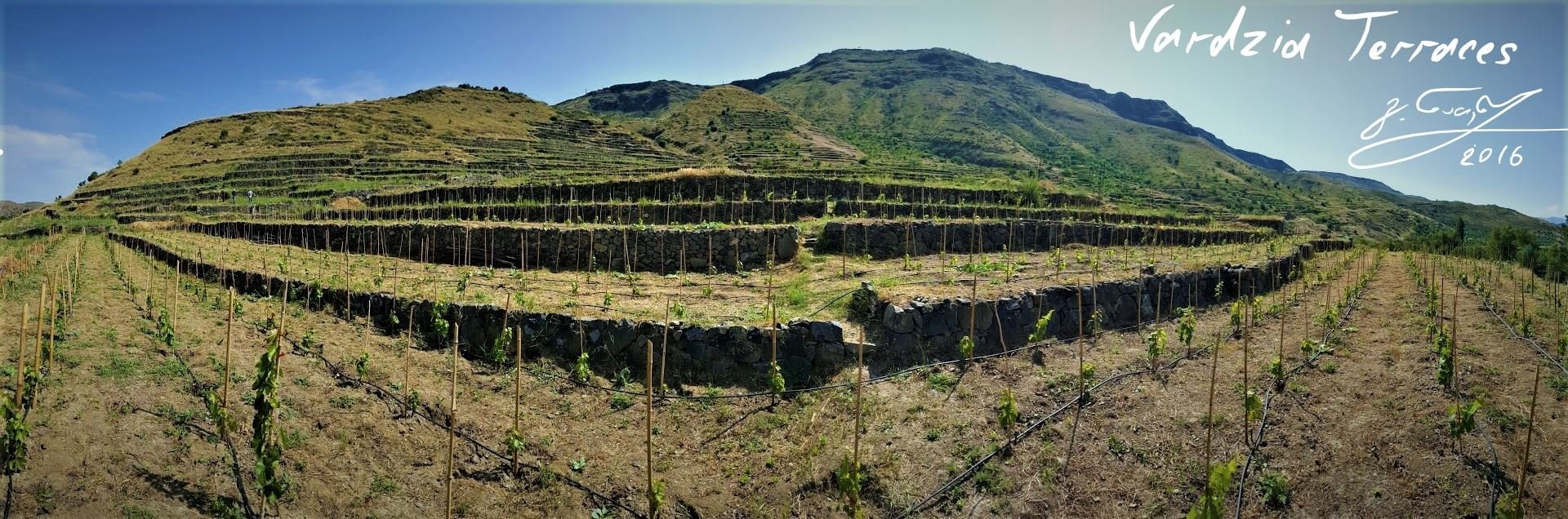
Four centuries of silence. One man with a mission. The wildest wines in Georgia.
Region: Samtskhe-Javakheti (Meskheti), southern Georgia
-
Natenadze's Wine Cellar is not a vineyard in any conventional sense — it is a forest, a mountain range, and a centuries-old act of survival.
-
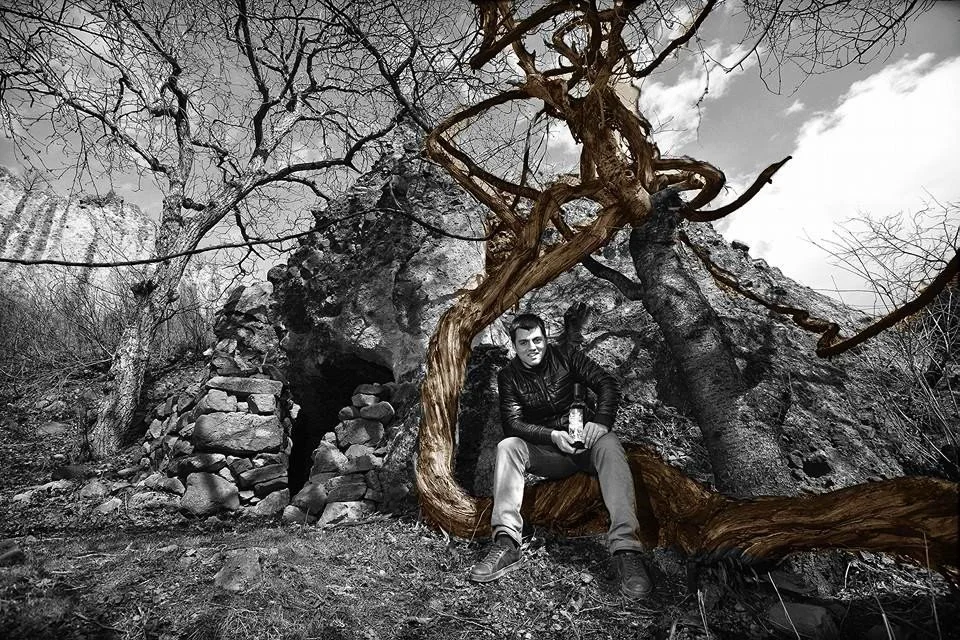
Giorgi Natenadze forages wild, self-rooted vines growing up fruit trees in the remote highlands of Meskheti, crafting strictly limited natural wines from endemic grape varieties that exist almost nowhere else on earth.
-
Each bottle is the result of years of research, hand-harvesting in difficult terrain, and minimal-intervention winemaking in traditional Georgian qvevri — an honest expression of one of the world's oldest, and most forgotten, wine cultures.
The story
For four centuries, the Meskheti region was occupied by the Ottoman Empire. Vineyards were uprooted, wine villages were abandoned, and the endemic grape varieties that had grown here since antiquity were left to fend for themselves — which, remarkably, some of them did. They climbed into the trees and survived.
Giorgi Natenadze grew up knowing this history. Over the past decade, he has devoted himself to searching the mountain forests of southern Georgia, near the Turkish border, for the vines that were never destroyed — only forgotten. He has found wild specimens more than a hundred years old, and one extraordinary vine he estimates to be over 400 years old, still alive, still bearing fruit.
In 2009, he produced the first wine to come out of the Meskheti region since the 16th century. Since then, he has identified 24 of the 40 rare grape varieties he has uncovered in these forests, each one a piece of a cultural puzzle that once seemed permanently lost. His cellar is not just a winery — it is an act of restoration.
Vineyard & terroir
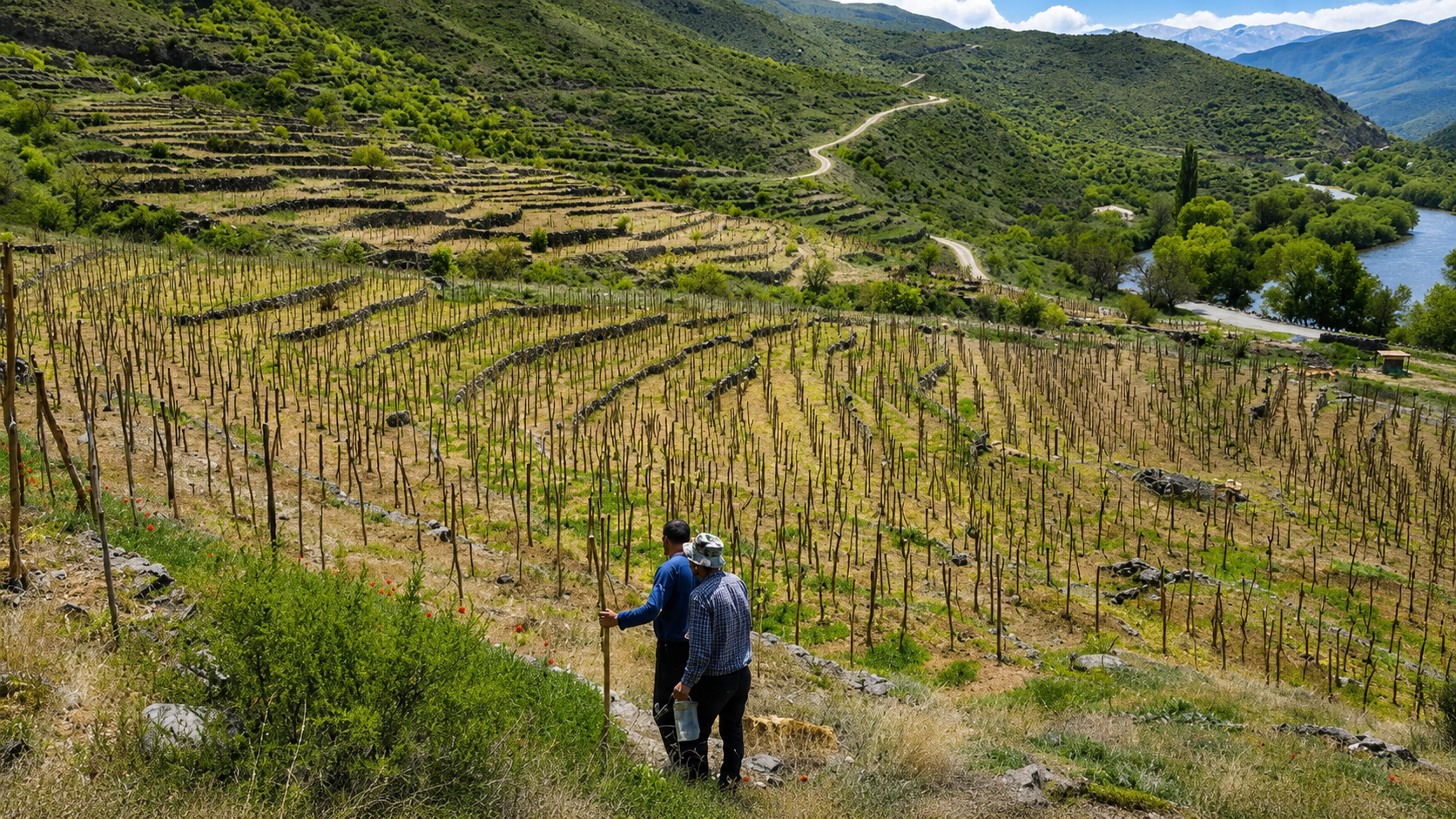
There are no neatly trellised rows here. Natenadze's "vineyard" is the wild forest of the Samtskhe-Javakheti highlands, where ancient self-rooted vines — untouched by phylloxera, ungrafted, untrained — climb 15 to 25 meters up fruit trees the way they have for centuries. These are not cultivated vines. They are survivors.
The region sits at elevations between 1,000 and 1,650 metres above sea level, with a dry continental mountain climate, basalt stone soils, and volcanic limestone. The combination of extreme altitude, dramatic temperature swings between day and night, and mineral-rich volcanic earth gives Natenadze's wines a character that is impossible to reproduce anywhere else. Low yields, high acidity, and deep complexity are the natural result.
The grape varieties themselves are equally rare: names like Chitiskvertskha Tetri (bird's egg white), Chitistvala Tetri (bird's eye white), Kharistvala (bull's eye red), and Tskhenis Dzudzu Tetri (horse breast white) reflect a local naming tradition that ties the vine intimately to the land and the people who once tended it. Several of these varieties exist in only a handful of trees in the entire world.
Winemaking style
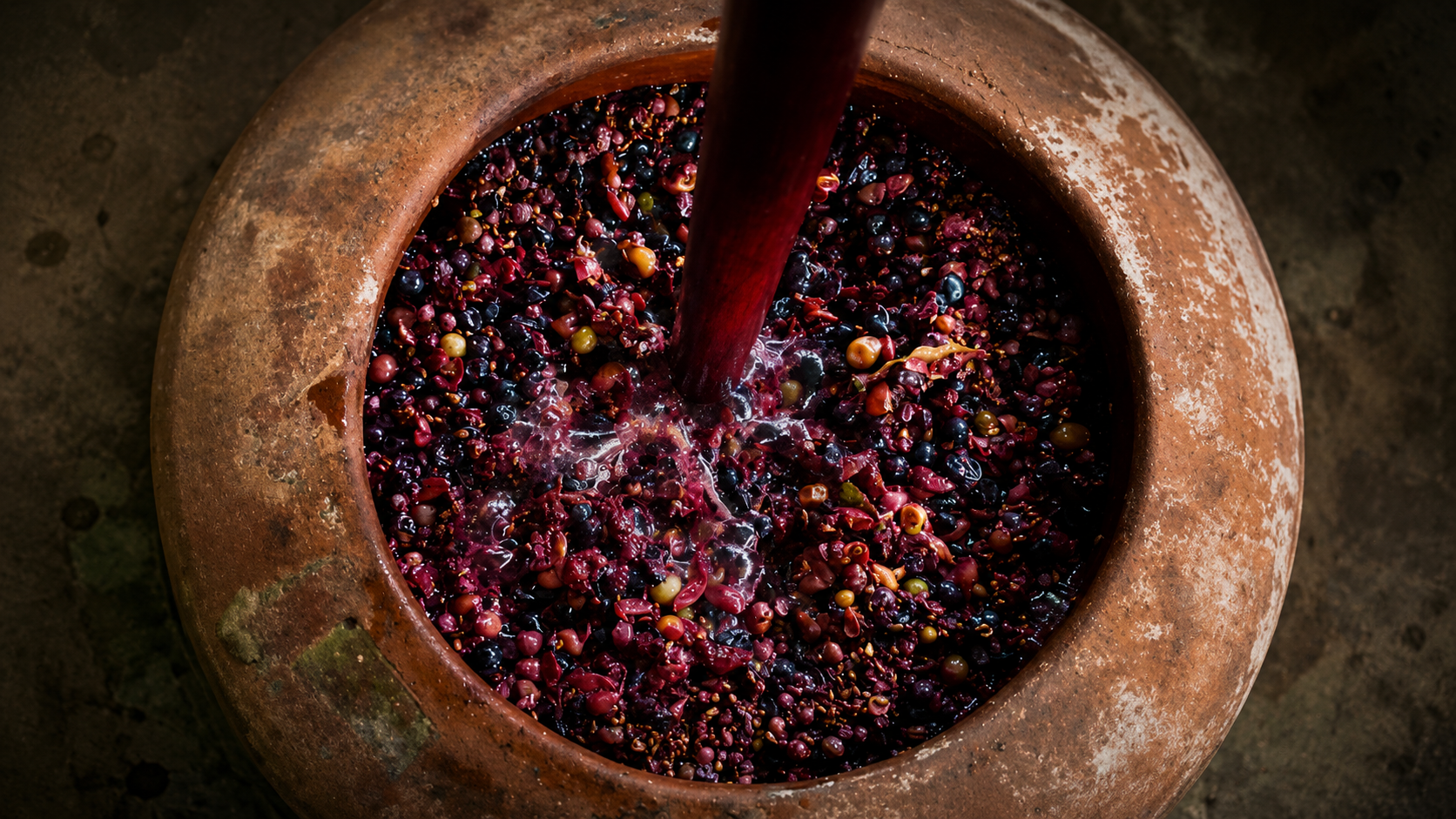
Natenadze's approach to winemaking is shaped by one guiding principle: do as little as possible, and let the vine speak. Grapes are hand-harvested from wild forest vines, often in difficult mountain conditions, and brought to the cellar where they are fermented and aged in qvevri — the traditional Georgian clay vessels buried in the earth that Georgia has used for 8,000 years of winemaking.
All wines undergo six months of skin contact in the qvevri before moving to stainless steel. There is no filtration, no fining, no artificial intervention. The result is wines that are unfiltered, deeply expressive, and harmoniously structured: low in alcohol, well-balanced in acidity, and carrying the unmistakable mineral signature of volcanic mountain soils.
Production is strictly limited — between 500 and 6,000 bottles per variety per year — because the vines themselves dictate what is possible. These are not wines that can be scaled. Each vintage is a small, unrepeatable event.
From natenadze’s Wine Cellar
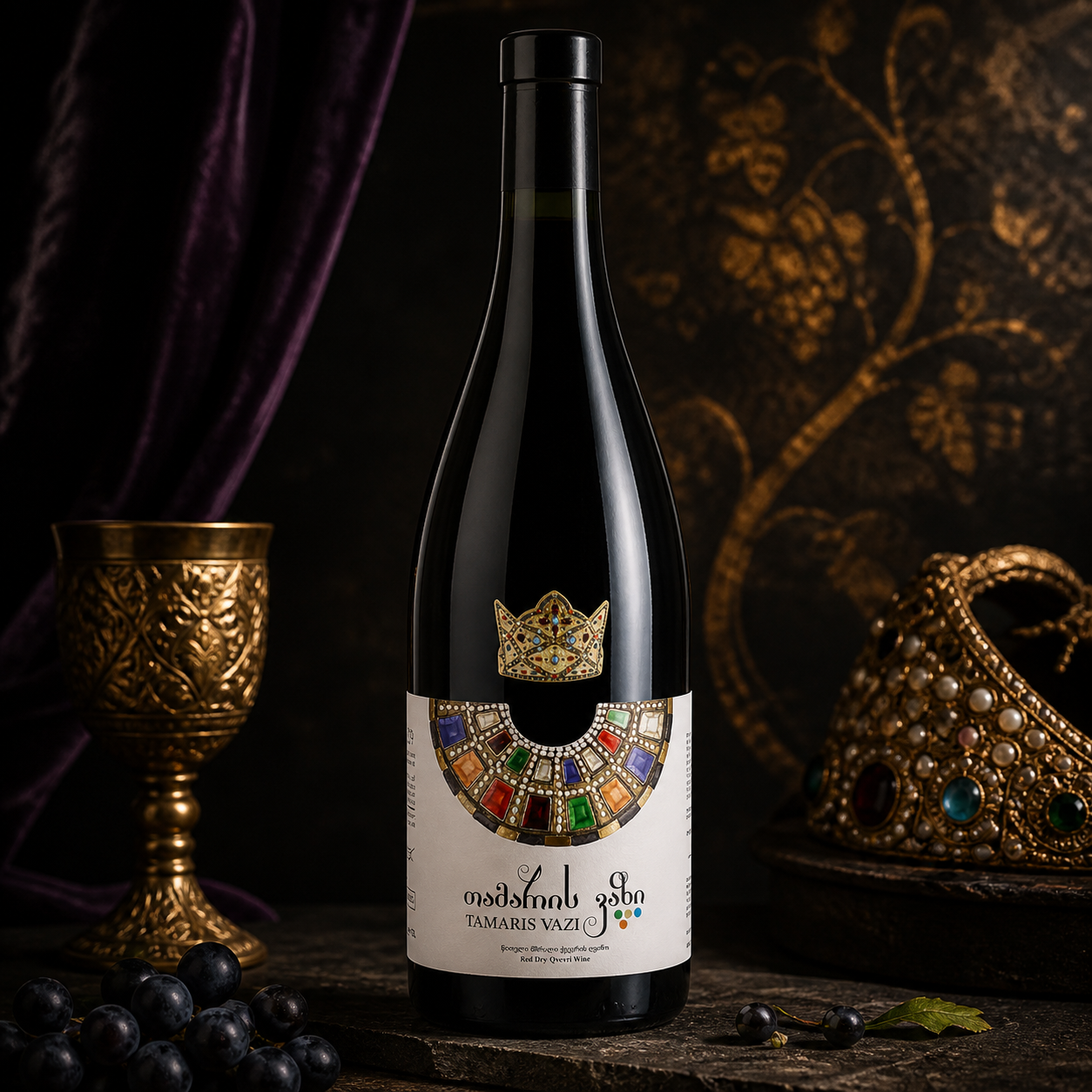
Some wines carry history. This one carries legend. According to Georgian tradition, Tamaris Vazi — literally "Queen Tamar's Vine" — was the favourite wine of Queen Tamar the Great, the legendary ruler who led Georgia through its Golden Age between 1100 and 1245, a period of unparalleled cultural and political greatness. For centuries this wild vine was thought lost forever, its vines growing untended in the volcanic mountain forests of South Georgia, forgotten by the world. Giorgi Natenadze found it again. And now, for the first time in centuries, you can taste what a medieval Georgian queen once loved.
Grape Variety 100% Tamaris Vazi — an ancient and almost mythical wild Georgian grape variety, named after Queen Tamar herself. Handpicked from century-old wild vines — some estimated to be between 100 and 400 years old — growing freely in the volcanic mountain forests of Samtskhe-Javakheti at altitudes of 1,000 to 1,650 metres above sea level. One of the rarest wines on earth.
Taste Profile Refined, elegant and deeply complex on the nose — opening with aromas of red currant, pomegranate, a whisper of leather and petrichor, the unmistakable scent of rain falling on dry earth. On the palate the wine is soft, rounded and gently spiced, with elegant natural acidity that carries through to a long, gloriously satisfying finish. A wine unlike anything else in the world.
Craftsmanship Crafted without added yeasts, this 2018 vintage ferments naturally in Qvevri — ancient Georgian clay vessels buried underground — before being transferred to stainless steel tanks after six months and naturally filtered without intervention. Every step of the process honours the wild, untamed origin of the grape. Production is extremely limited — making each bottle a genuinely rare find.
Serving Suggestions A wine worthy of a special occasion. Pairs beautifully with roasted lamb, game, aged cheeses and earthy mushroom dishes. Best served at 14–16°C. Avoid direct sunlight.
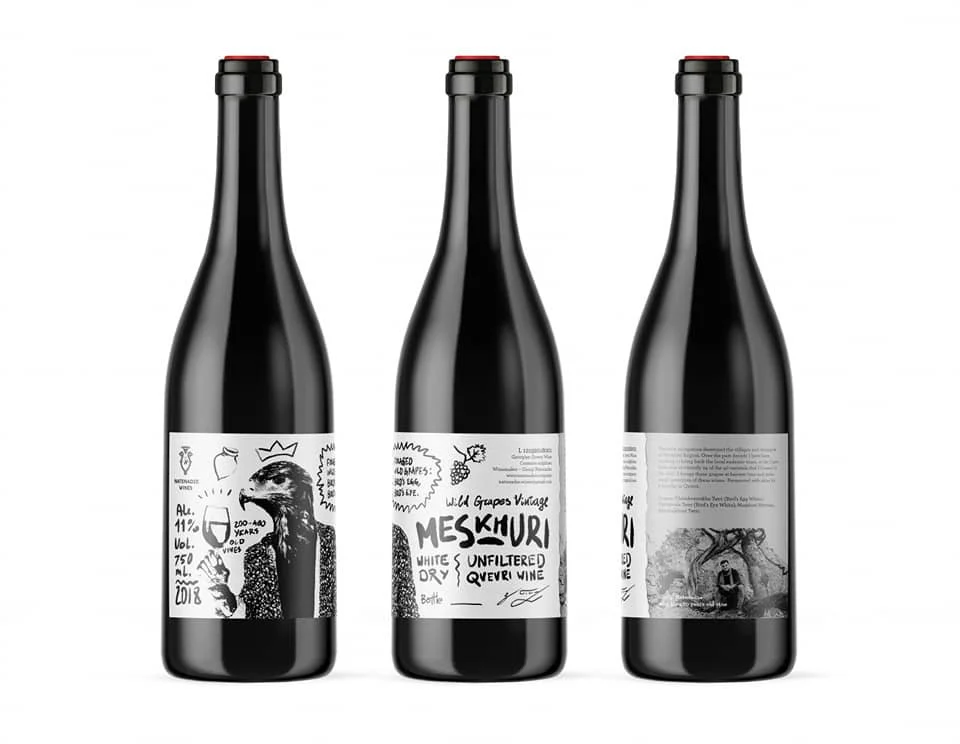
There are wines made from grapes. And then there is this — a wine made from wild vines that no one planted, growing freely in the mountain forests of South Georgia, untouched since the 16th century. Giorgi Natenadze doesn't farm his grapes. He finds them — climbing through ancient trees on forested volcanic slopes at altitudes of up to 1,650 metres, harvesting by hand from vines that are sometimes over 400 years old. The result is something that cannot be replicated anywhere else on earth — a wine of wild, pure energy that carries the untamed soul of Meskhetian history in every sip.
Grape Variety A rare and extraordinary blend of three wild, near-extinct indigenous Meskhetian grape varieties — Tskhenis Tvala, Kharis Tvala and Tskhenis Dzudzu — foraged entirely by hand from ancient wild vines growing in the forested mountain slopes of South Georgia. These vines have not been cultivated since the 16th century, when Ottoman occupation destroyed every vineyard in the Meskheti region. Some of the vines are estimated to be over 400 years old.
Taste Profile Pale and delicate in the glass, with enchanting aromas of wild strawberry, fresh raspberry and forest blossom — sweet, pure and completely untamed. On the palate the wine is light, crisp and refreshingly alive, with a clean natural acidity and a finish that carries the wild freshness of the Georgian mountain forests all the way through to the last drop.
Craftsmanship Produced without added yeasts, this 2018 vintage ferments naturally before spending six months in Qvevri — ancient Georgian clay vessels buried underground. The wine is then transferred to stainless steel tanks and left until naturally clear, filtered only by time and patience. No intervention, no shortcuts — just wild grapes, ancient vessels and the quiet wisdom of a winemaker who has dedicated his life to rescuing what was almost lost forever. Named by Forbes among the best wines of 2020. Production is extremely limited.
Serving Suggestions Light, fresh and wonderfully food-friendly. Pairs beautifully with white meat, veal and delicate poultry dishes. Best served chilled at 10–12°C. Avoid direct sunlight. Alcohol: 11% — 750ml.