
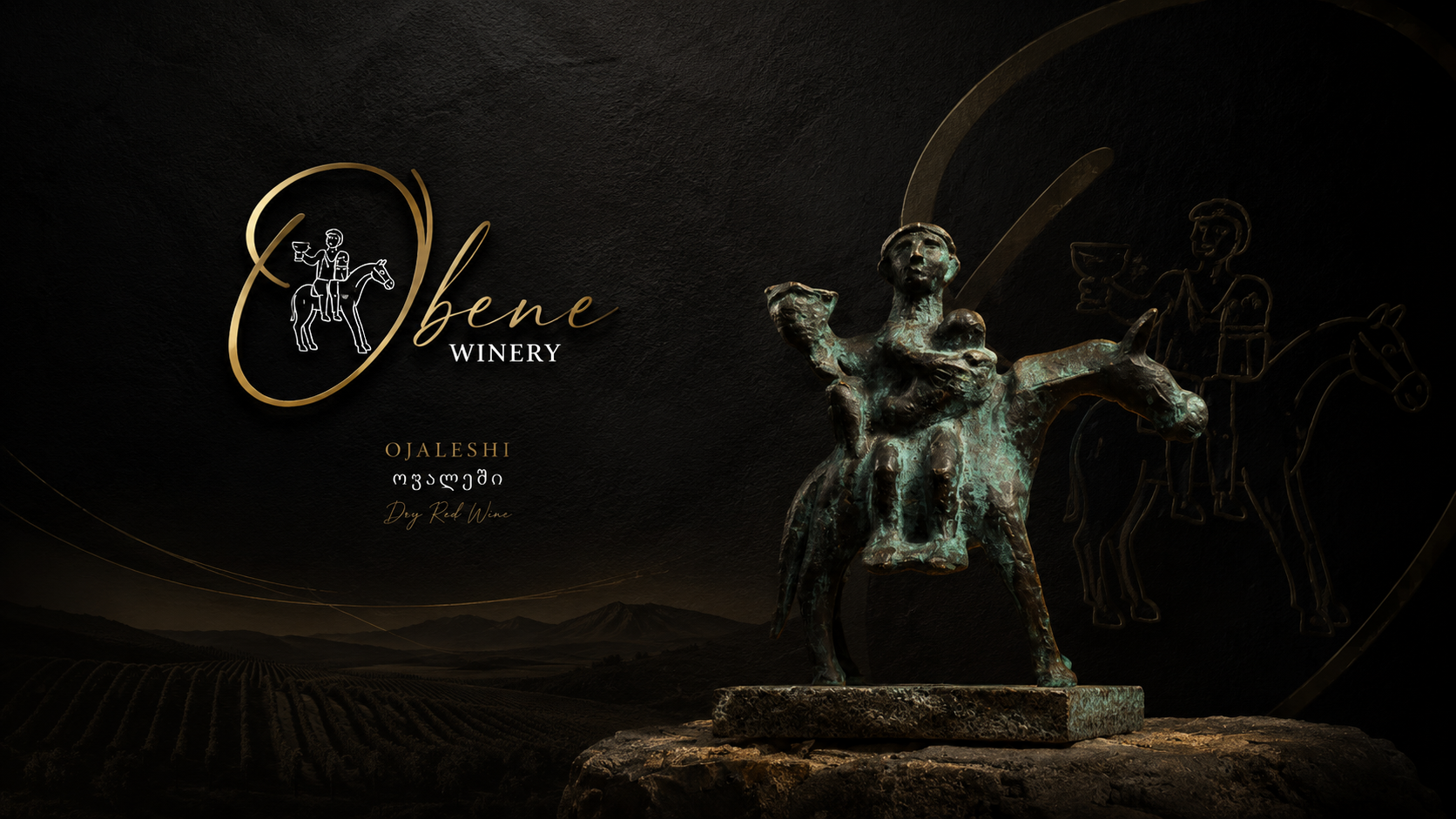
Obene Winery
Where Megrelian soil, sacred trees, and a quiet obsession make wine unlike anywhere else
Small harvest. Rare grapes. A region rediscovering its voice.
Region: Samegrelo (Mukhuri, Chkhorotskhu Municipality), Western Georgia
-
Obene is a family winery tucked into the village of Mukhuri in Georgia's Samegrelo region — a lush, green corner of the western Caucasus where wine was once part of everyday life before its traditions slowly faded. Founded by Misha and Ana Tsirdava, Obene is quietly bringing those traditions back, one rare grape variety at a time, across four hectares of vines and a cellar built on patience and conviction.
-
From the rediscovered white Chvitiluri to the deep red Ojaleshi, every bottle from Obene is made in qvevri using traditional Megrelian methods — minimal intervention, maximum character, and the kind of hospitality that makes you feel the wine was made specifically for the table you're sitting at.
The story
Misha Tsirdava was living in the city when he made the decision that would define the next chapter of his life — and, quietly, help define an entire region's wine future. He left, settled in the village of Mukhuri in western Georgia's Samegrelo, and began searching.
He was looking for grapes. Specifically, the endemic Megrelian varieties that ancient ampelography texts described but that had all but vanished from cultivation. After nearly two years of exploration across the region, he found what he was looking for: the white Chvitiluri and the red Koloshi, rare indigenous vines that had survived at the margins of agricultural memory. He planted them. He built a cellar. In 2017, Obene Winery officially opened.
The name is not incidental. "Obene" refers to the traditional outdoor shrine spaces found throughout Samegrelo — places typically centred around a sacred tree, where prayers and offerings are made during the grape harvest. It is a name that carries the full weight of what this winery is trying to do: reconnect a community, a region, and a craft to something ancient and meaningful, one bottle at a time.
Obene is now one of the pioneer voices calling for the revival of Samegrelo's winemaking heritage — and the wines are beginning to travel, reaching the United States, Spain, and France.
Vineyard & terroir
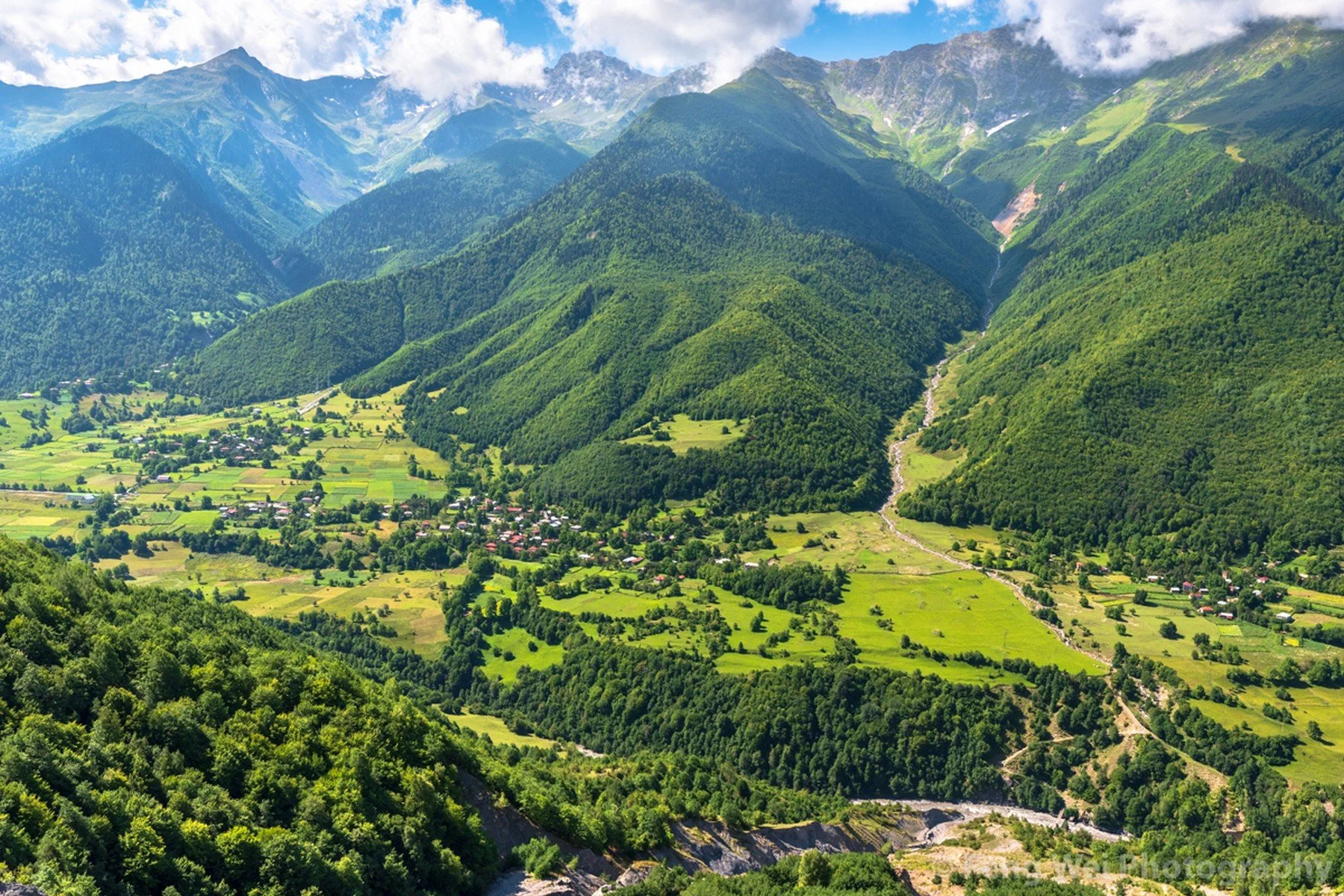
Mukhuri sits in the lush lowlands of western Georgia's Samegrelo region, a dramatically different landscape from the dry, volcanic highlands of eastern Georgia. Here the climate is warmer and more humid, the soils are rich and varied, and the surrounding forests give the land a wild, verdant quality that feels more ancient than agricultural.
Obene works four hectares of vines, planted with both rediscovered Megrelian varieties and other traditional western Georgian grapes: Chvitiluri, Koloshi, Ojaleshi, Krakhuna, Tsolikauri, and Otskhanuri Sapere.
Each variety carries its own distinct character, shaped by the particular conditions of Samegrelo's microclimate — warm summers tempered by the proximity of the Caucasus range, soils that shift between alluvial and clay-rich, and an agricultural tradition that long predates any modern understanding of what a "vineyard" is supposed to look like.
The Ojaleshi grape, in particular, thrives here in a way it rarely does elsewhere, producing wines of striking elegance at naturally low alcohol levels — a reflection of a terroir that rewards restraint.
Winemaking style
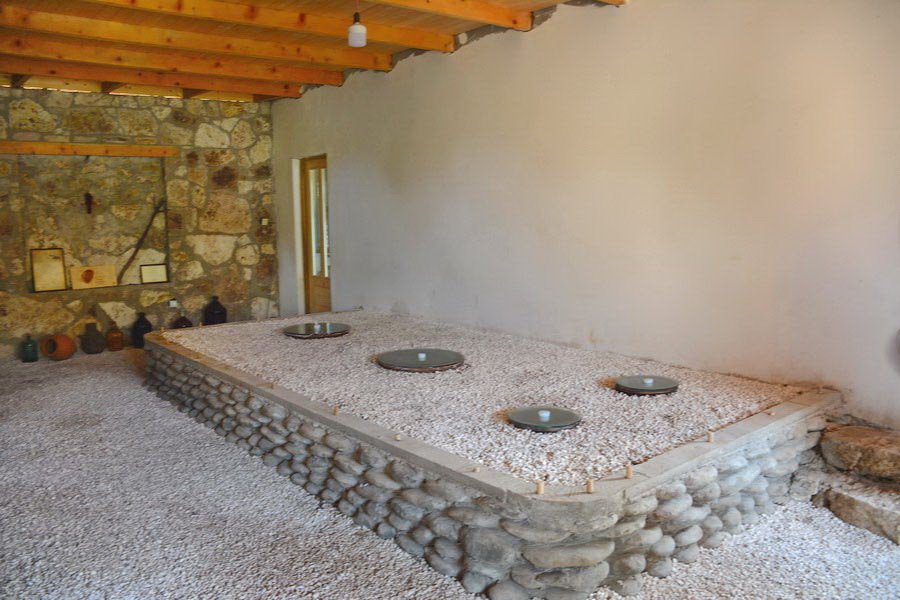
Obene's winemaking is guided by tradition, not trend. Wines are fermented and aged in qvevri — the clay vessels buried in the earth that have been central to Georgian winemaking for eight thousand years — with no filtration and minimal intervention at every stage. The process is deliberate and unhurried, producing wines that are deeply expressive of both variety and place.
The Chvitiluri, Obene's flagship amber wine, undergoes skin contact in qvevri, emerging with a dark straw-gold colour and a bold, fruity character that pairs naturally with the fresh Guda cheese the Tsirdava family also make on the estate. The Ojaleshi — dark, velvety, and hauntingly aromatic with cherry and a whisper of caramel — is made at just eleven percent alcohol, achieving a balance that many winemakers working with far more famous grapes struggle to reach. The Tsolikauri white brings brightness and lift, with peach and citrus on the nose and the kind of freshness that makes it as comfortable at a long table as it is in a wine glass alone.
Production is small — around 4,000 bottles per year across all varieties — which means each wine retains the character of something genuinely handmade, and genuinely rare.
From the cellar of Obene
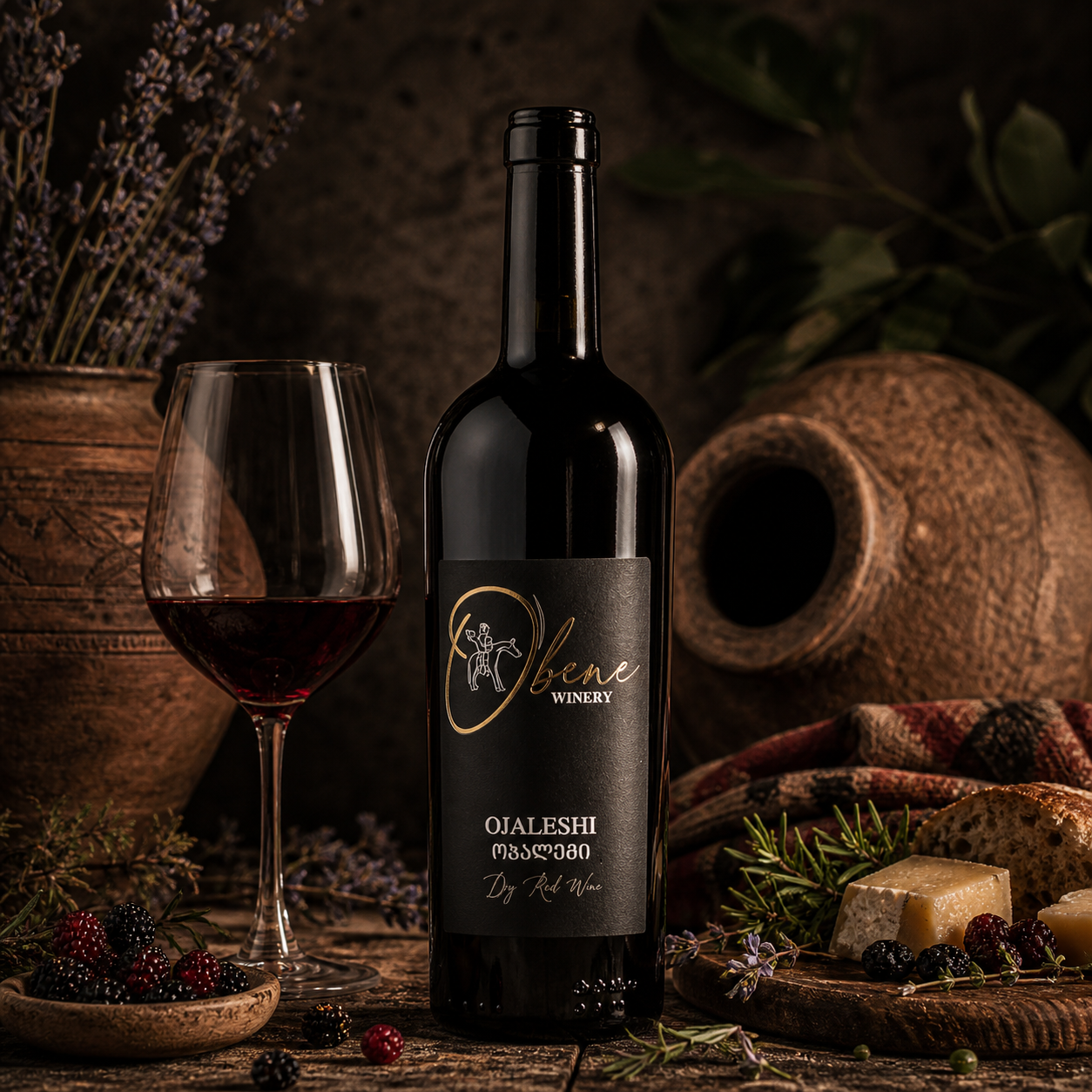
Carmine red and hauntingly aromatic — this is a wine that exists on the edge of history. Ojaleshi is one of Georgia's rarest indigenous grape varieties, nearly lost to time, and this 2016 expression from Obene Winery in the ancient region of Samegrelo is a testament to the passionate few who refused to let it disappear. Crafted in Qvevri buried beneath open skies in West Georgia — shaded by trees, kissed by the Mingrelian breeze — this is a wine of rare beauty, quiet complexity and profound authenticity.
Grape Variety 100% Ojaleshi — a near-extinct indigenous Georgian grape from the Samegrelo region of West Georgia, one of the rarest and most precious varieties in Georgia's extraordinary viticultural heritage. Handpicked with care to preserve every nuance of this irreplaceable variety.
Taste Profile Brilliant carmine red in the glass, with a captivating nose of rosemary, lavender, wild berries and earthy herbal spice — an aromatic combination that is entirely its own. On the palate the wine is elegant and layered, with a beautifully balanced structure, gentle tannins and a long, fragrant finish that lingers with wild herbs and dark fruit.
Craftsmanship Handpicked from Obene Winery's vineyards in Mukhuri, Mingrelia, this 2016 vintage is crafted using the traditional Kakhetian Qvevri technique with remarkable attention to detail. The grapes are pressed without stems and fermented for 8–9 days with the seeds, then transferred to fresh Qvevri to age without the seeds. After six weeks the wine moves to a third set of Qvevri for natural filtration, where it rests for a further six months. What makes Obene truly unique is that their Qvevri are buried outside in the open earth — shaded by trees growing alongside them — a practice as ancient and poetic as the wine itself.
Serving Suggestions Best served at 14–16°C. A natural companion to poultry, veal, lamb, young cheeses and pasta. Avoid direct sunlight. Alcohol: 12.5% — 750ml.
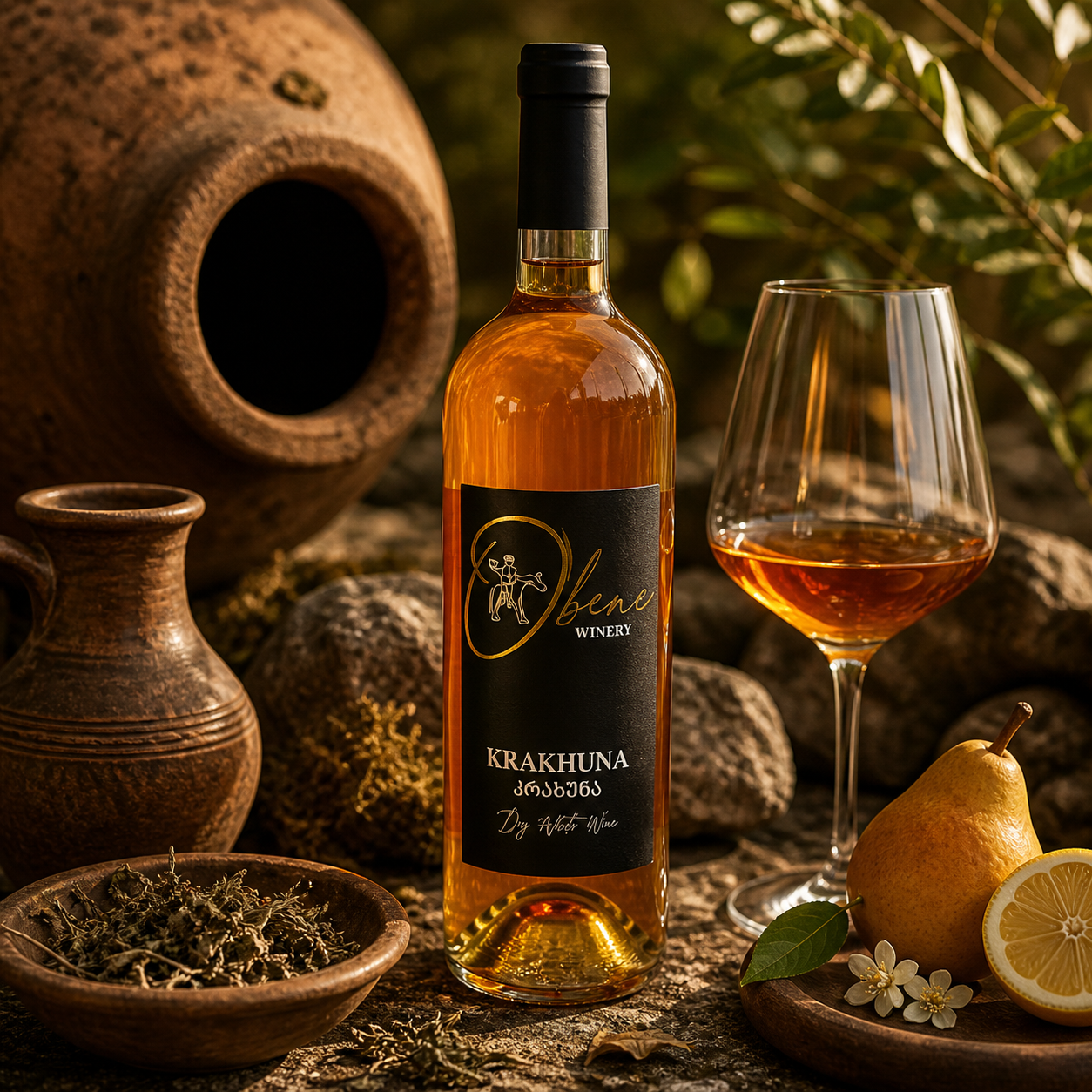
Deep, concentrated and quietly powerful — this is an amber wine that reveals itself slowly and rewards those who wait. Krakhuna is one of West Georgia's most ancient and near-extinct indigenous grape varieties, and this 2018 expression from Obene Winery in Mukhuri is one of the most compelling interpretations of it in existence. Aged for six months in Qvevri buried in open earth beneath the shade of trees, this wine carries the full, untamed character of the Mingrelian landscape in every glass — earthy, complex and utterly unlike anything else.
Grape Variety 100% Krakhuna — a rare and near-extinct indigenous Georgian white grape from the Samegrelo region of West Georgia, one of the most ancient and least-known varieties in Georgia's extraordinary viticultural heritage. Handpicked with care to honour the rarity and fragility of every cluster.
Taste Profile Deep, concentrated old-gold amber in the glass. The nose is initially closed and intriguing — earthy and terroir-driven, with aromas of herbs, floor wax and dark soil that gradually evolve into ripe pear, delicate blossom and fresh citrus. On the palate the wine announces itself with real power and confidence — beautifully balanced, with stunning natural acidity, a subtle and elegant bitterness and a deep, complex finish that lingers long after the last sip. A wine that demands your full attention.
Craftsmanship Handpicked from Obene Winery's vineyards in Mukhuri, Mingrelia, this 2018 vintage is crafted with exceptional precision using the traditional Kakhetian Qvevri technique. The grapes are pressed without stems and fermented for 8–9 days in contact with one third of the grape seeds, then transferred to fresh Qvevri to age without seeds. After six weeks the wine moves to a third set of Qvevri for natural filtration, where it rests for a further six months. True to Obene's unique and poetic philosophy, all Qvevri are buried outside in open earth — shaded by trees standing beside them — a winemaking practice as ancient and elemental as the grape itself.
Serving Suggestions Best served at 10°C. A magnificent companion to white meat, lobster and pan-fried fish. Allow the wine time to open in the glass before drinking — it will reward your patience. Alcohol: 13.5% — 750ml.
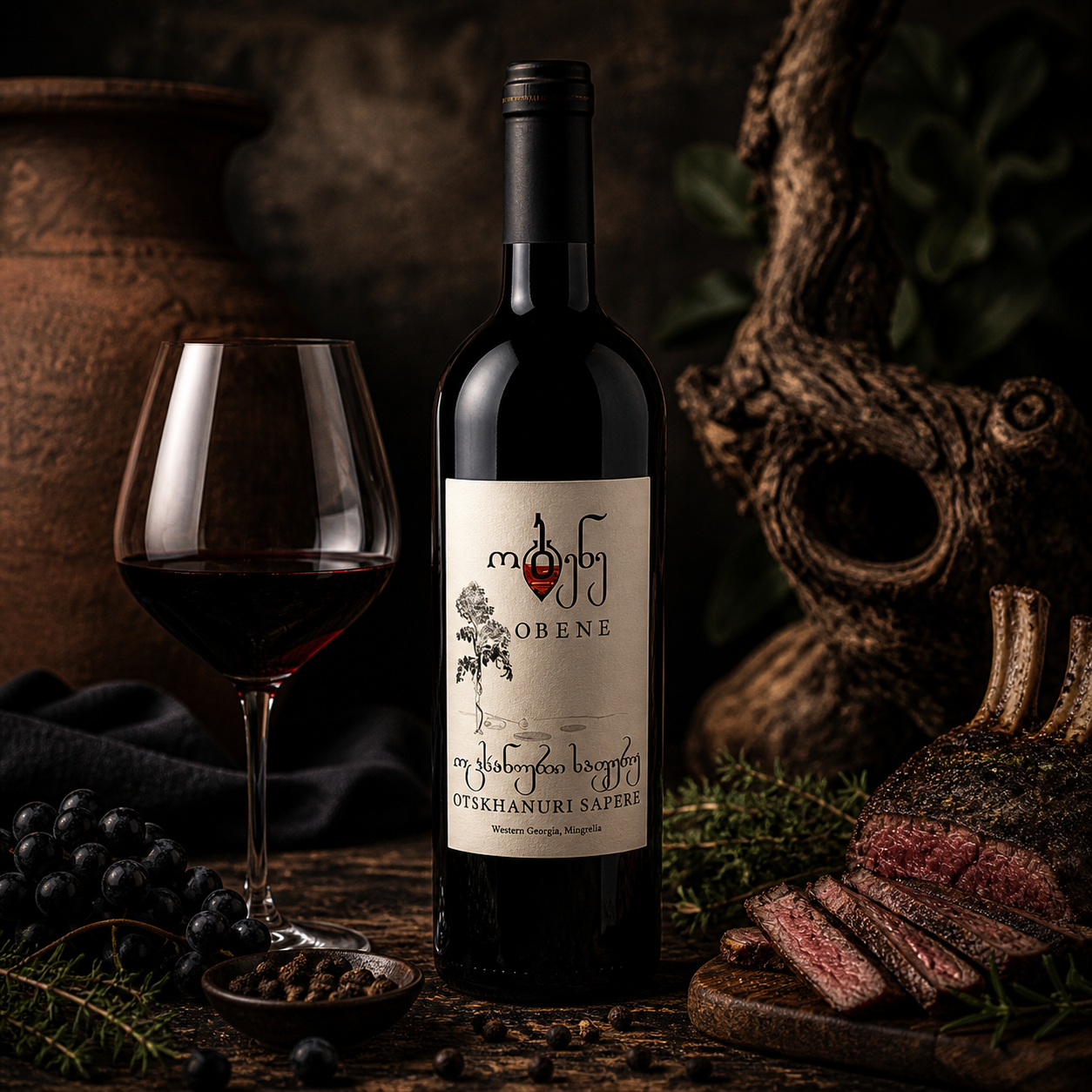
Dark as midnight and wild as the Georgian countryside that gave it life — this is a wine that commands silence at the first sip. Nearly black in the glass, this 2018 Otskhanuri Sapere from Obene Winery in Mukhuri is one of the most intense, complex and captivating wines in Georgia's extraordinary viticultural story. Crafted from a near-extinct indigenous grape using ancient Qvevri buried in open earth under the shade of trees, this is not just a wine — it is a living piece of Georgian history.
Grape Variety 100% Otskhanuri Sapere — a near-extinct indigenous Georgian red grape from the Samegrelo region of West Georgia, one of the darkest and most intensely pigmented varieties in Georgia's vast collection of ancient native grapes. Handpicked with meticulous care to honour the rarity of every single cluster.
Taste Profile Deep dark cherry, almost black in the glass. The nose is wild and complex — earthy and animalistic at first, then opening into layers of ripe cassis, blackberry, parsley root, ink, garrigue and thyme. On the palate the wine is juicy, balanced and beautifully fresh, with ripe, velvety tannins and a rich, lingering finish of dark chocolate, wild spice and black fruit. Intense, layered and utterly unforgettable.
Craftsmanship Handpicked from Obene Winery's vineyards in Mukhuri, Mingrelia, this 2018 vintage is crafted using the traditional Kakhetian Qvevri technique with exceptional precision. The grapes are pressed without stems and fermented for 8–9 days with the seeds, then transferred to fresh Qvevri to age without the seeds. After six weeks the wine moves to a third set of Qvevri for natural filtration, resting for a further six months. True to Obene's unique and poetic winemaking philosophy, all Qvevri are buried outside in open earth — shaded by trees standing beside them — a practice as ancient as Georgian civilisation itself.
Serving Suggestions A wine built for bold food. Pairs magnificently with dry-aged meat, game and pulled pork. Best served at 18–20°C. Alcohol: 14.3% — 750ml.