
What Is Saperavi? Georgia's "Black Wine" Grape Explained
Pour a glass of Saperavi and hold it up to the light. Go on, actually try it next time you have a bottle in hand. Most red wines let a little light through at the edges, a thin rim of ruby or garnet where the glass thins out. Saperavi doesn't bother. It stays almost black, edge to edge, like someone mixed red wine with ink.
That's not a trick of the label or a heavy handed winemaker showing off. It's the grape itself, doing something almost no other grape on earth does. Here's the full story of Saperavi: what it is, why it looks the way it does, and why it deserves a much bigger reputation outside Georgia than it currently has.
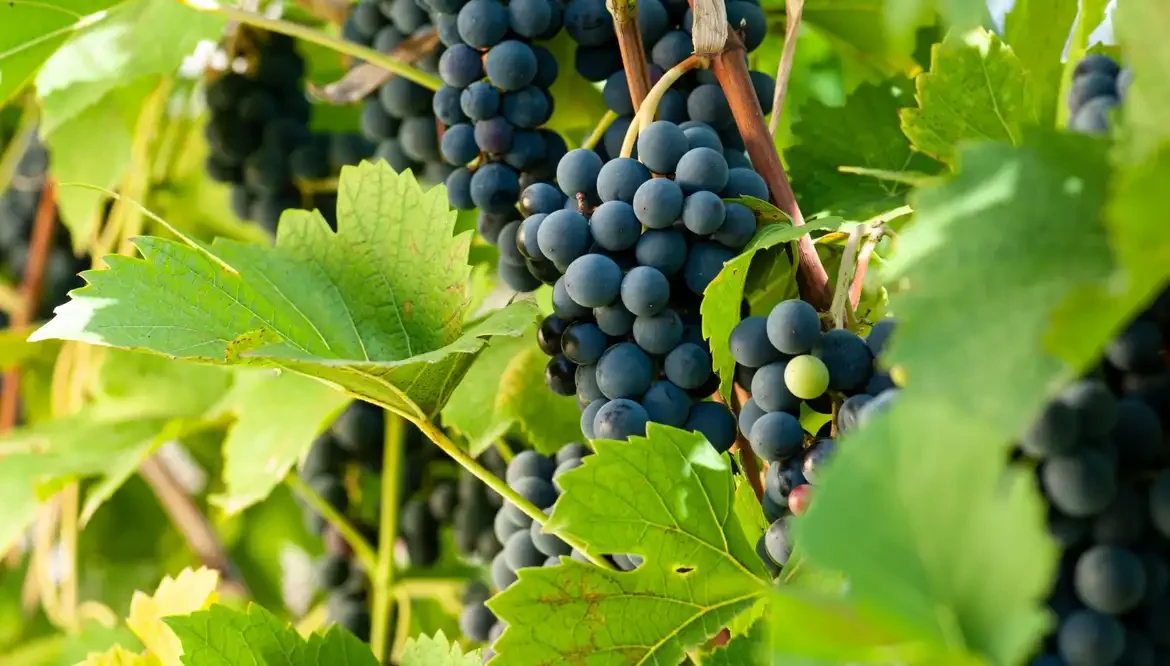
Saperavi grapes on the vine in Kakheti, Georgia, ©Sachoki / www.shutterstock.com
What Does "Saperavi" Actually Mean?
Saperavi (საფერავი in Georgian) translates roughly to "to dye," "to paint," or "to give color." It's not a poetic marketing name dreamed up later. It's a literal, functional description, the kind of name you'd give a grape if you were a Georgian winemaker centuries ago trying to explain to your neighbor exactly what made this one different from every other red grape in the vineyard.
And what made it different is still exactly why it's remarkable today.
The Grape That Bleeds From the Inside
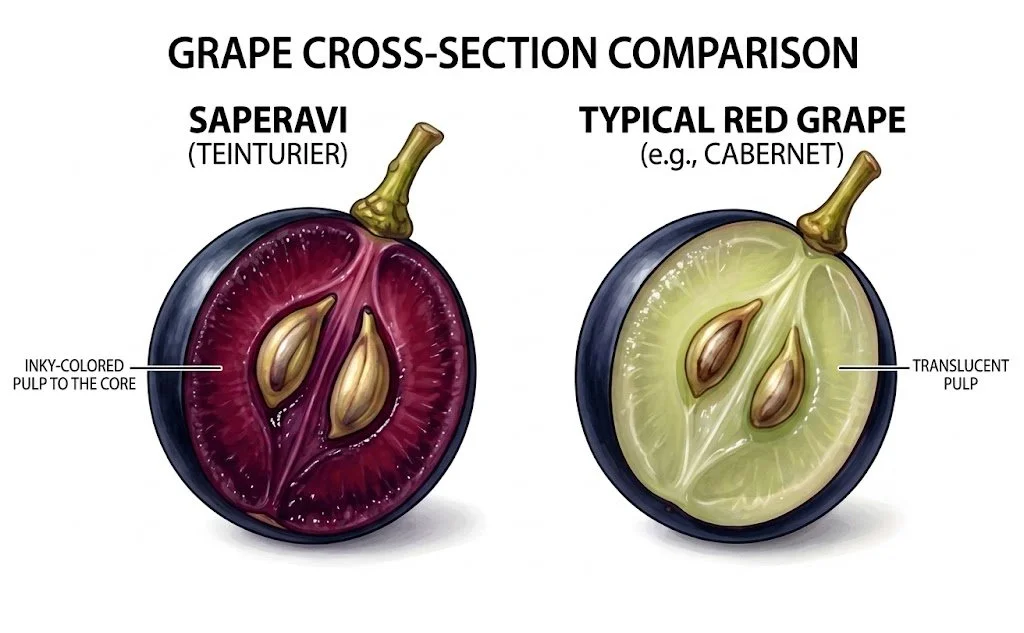
Here's the part that surprises most wine drinkers, even fairly experienced ones: in almost every red wine grape on the planet, the juice itself is pale, nearly clear. The color you see in your glass of Cabernet or Pinot Noir doesn't come from the juice at all. It comes from the skins, which get left in contact with that clear juice during fermentation, slowly bleeding their color into it. Peel the skin off most red grapes and the flesh underneath looks basically like a white grape.
Saperavi breaks that rule entirely. It belongs to a small, unusual category of grapes called teinturier grapes (from the French word for "dye" or "stain"), where the flesh itself, not just the skin, is red. Cut a Saperavi grape in half and the juice running out is already deeply colored, before it has touched a single skin. Combine that pre-colored juice with Saperavi's own thick, deeply pigmented skin, and you get wine that's less "red" and more genuinely, properly black.
There are only a handful of teinturier grapes used seriously in winemaking anywhere in the world. Saperavi isn't just one of them, it's arguably the most important one still made as a proper standalone wine, rather than just a blending grape used to darken something else.
Home Turf: Kakheti and Beyond
Saperavi is native to Georgia and remains overwhelmingly concentrated there, especially in Kakheti, in the Alazani and Iori river valleys, where warm days and cool nights let the grape build real depth of flavor while holding onto its naturally high acidity. It's genuinely Georgia's most important red grape by a wide margin, accounting for roughly a third of the country's entire wine production and the vast majority of Saperavi grown anywhere on earth.
Because Georgia has such a well developed appellation system, where you find Saperavi grown often tells you what to expect before you've even opened the bottle:
Mukuzani, big, bold, and structured, often aged in oak
Napareuli, a touch more elegant and restrained
Akhasheni and Kindzmarauli, semi-sweet styles that soften Saperavi's naturally high acidity with residual sugar, without losing its color or backbone
Kvareli, a dry style from the same district that gives Kindzmarauli its name
If you've ever wondered why two bottles both labeled "Saperavi" can taste completely different, this is why. The grape is one thing. The place it's grown, and the style it's made in, is another entirely.
How Saperavi Gets Made, Two Very Different Ways
Traditional Kakhetian winemaking treats Saperavi the same way it treats Georgia's white grapes: straight into the qvevri, often with stems and skins left in contact for months. That extended maceration pulls out serious tannin and earthy depth, producing the powerful, structured, slow-aging style Saperavi is historically known for. Made well, dry qvevri Saperavi can age for a decade or more, gaining complexity the way a good Bordeaux or Barolo does.
Plenty of modern producers take a different route entirely: stainless steel, shorter maceration, a focus on fresh, ripe fruit rather than heavy tannin and earth. Neither approach is more "correct." They're just different lenses on the same grape, and honestly, trying both versions side by side is one of the more genuinely fun ways to understand what winemaking choices actually do to a wine.
What Does Saperavi Actually Taste Like?
Expect dark fruit across the board: black plum, black cherry, blackberry, sometimes dried prune, often with a savory, earthy edge and real tannic grip. Some styles bring a distinct white pepper spice note, especially riper, reserve-style bottlings. Acidity stays notably high even in fuller-bodied versions, which is part of why Saperavi ages so well and why it doesn't feel heavy or flabby even at higher alcohol levels.
If you know Syrah or a structured Cabernet Sauvignon, you're in roughly the right neighborhood, but Saperavi has its own thing going on: that teinturier-driven color intensity, plus an earthy, slightly wild character that comes through even in cleaner, modern styles.
A Grape That Traveled
Saperavi didn't stay confined to Georgia forever. It spread through the wider Black Sea region over the last century or so and became a genuinely important variety in Moldova, Ukraine, and Bulgaria, prized largely for the same reason Georgians have always valued it: that intense, reliable color and cold hardiness that lets it survive tougher climates than more delicate grapes can handle.
It even made it to the United States decades before most Americans had heard of Georgian wine at all. Legendary winemaker Konstantin Frank planted Saperavi in New York's Finger Lakes region back in 1958, and it's recently been getting a second look there as a grape that can deliver real depth of color and structure in a cool climate where that's normally difficult to achieve.
Why Saperavi Deserves More Attention
There's a decent argument that Saperavi is one of the most underrated red wine grapes in the world right now. It has everything wine collectors normally look for: real aging potential, a distinctive flavor profile you won't mistake for anything else, genuine cold-climate versatility, and a production story going back thousands of years. What it hasn't had, until fairly recently, is international name recognition on the level of Cabernet, Syrah, or Malbec.
That's changing. As Georgian wine continues gaining ground with sommeliers and natural wine drinkers internationally, Saperavi is very often the bottle that converts skeptics, precisely because it doesn't taste like a curiosity. It tastes like a serious, well made red wine that happens to come from a very old and very specific place.
How to Actually Try It
If you're new to Saperavi, start with a straightforward dry bottling to understand the grape itself before branching out into oak-aged reserve styles or the semi-sweet Kindzmarauli expression, both of which are more specific interpretations rather than a "truer" version of the grape.
Our Winiveria Saperavi is a clean, classic entry point from Kakheti itself. Once you know you like it, Marbano Saperavi Reserve shows a bigger, more concentrated side of the grape, and Winiveria Kindzmarauli demonstrates the semi-sweet style that's historically one of Georgia's most famous wine exports. For the full walkthrough of where Saperavi fits alongside Georgia's other grapes, our buyer's guide to the best Georgian wines to try first is a good next stop, and our guide to Georgia's wine regions explains exactly why Kakheti, specifically, is where this grape performs best.
FAQ: Quick Answers About Saperavi
-
It translates to "to dye," "to paint," or "to give color," a direct reference to the grape's intensely pigmented flesh and juice.
-
Saperavi is a teinturier grape, meaning both its skin and its flesh are red. Most red grapes only have colored skin, with clear juice underneath, so Saperavi produces unusually dark, opaque wine even before extended skin contact.
-
Both exist. Dry Saperavi is common and often age-worthy, while semi-sweet styles like Kindzmarauli and Akhasheni are also traditional and historically some of Georgia's most famous exports
-
There are some similarities in body and structure, but Saperavi has its own distinct earthy, spiced character and notably higher natural acidity, which sets it apart from most international reds.
-
It's an important variety in Moldova, Ukraine, and Bulgaria, and has more recently gained attention in cooler climate US regions like New York's Finger Lakes.
